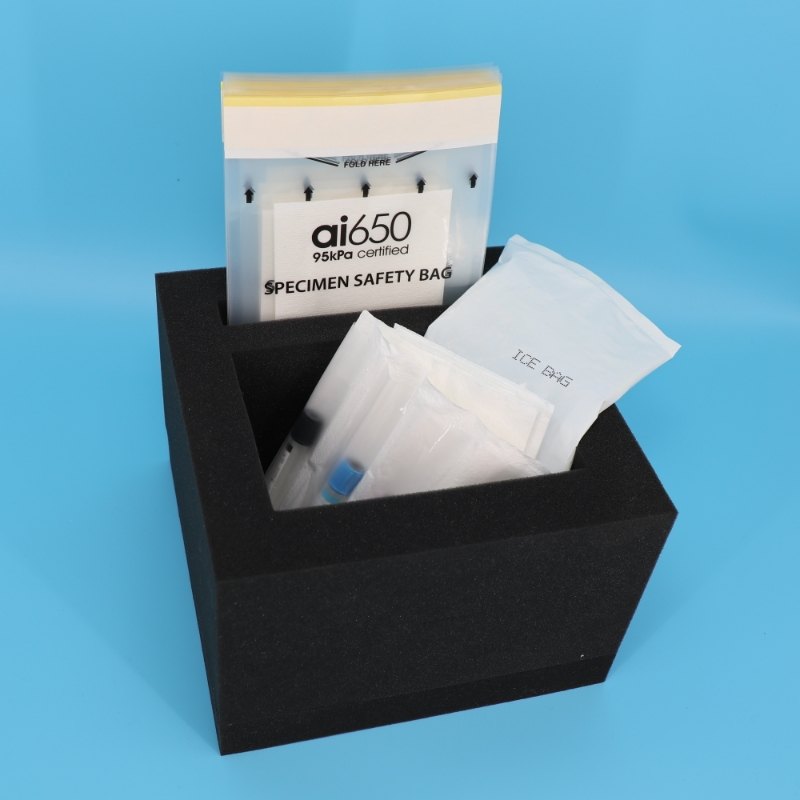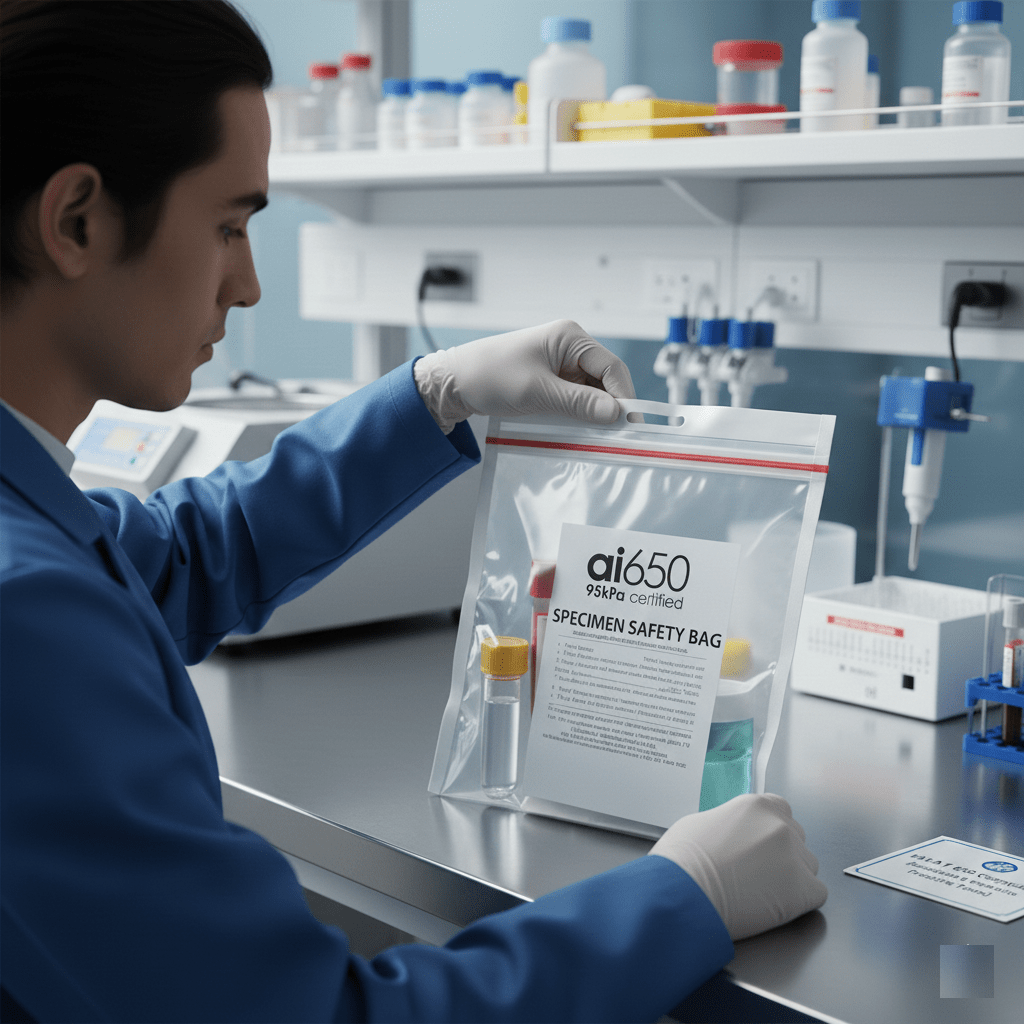
In the world of medical diagnostics, we often focus on the high-tech lab equipment or the skill of the pathologist. But there is a silent, critical player in the “chain of custody” that ensures those results are accurate and safe: the 95kPa Specimen Transport Bag.
If you work in healthcare, laboratory services, or medical logistics, you’ve likely seen these heavy-duty plastic bags. But why are they so specific, and what does “95kPa” actually mean?
What Exactly is a 95kPa Bag?
A 95kPa bag is a specialized secondary pressure vessel designed for the transport of hazardous or sensitive biological substances (Category A and Category B).
The name refers to a rigorous engineering standard. These bags are tested to withstand an internal pressure differential of 95 kilopascals (kPa)—roughly 13.8 psi—without leaking.
Why the Pressure Test Matters
When medical specimens are transported by air, they experience significant changes in atmospheric pressure.
The Risk: In a depressurized cargo hold, a standard plastic bag or a poorly sealed tube can “pop” or leak due to the pressure imbalance.
The Solution: The 95kPa rating ensures that even if the primary container (like a blood tube or urine cup) fails, the secondary bag remains airtight and watertight, containing any potential biohazards.
Key Features of a High-Quality 95kPa Bag
Not all specimen bags are created equal. When sourcing 95kPa safety bags, look for these essential features:
Permanent Adhesive Closures: Most use a “peel-and-seal” strip that is tamper-evident and impossible to reopen without destroying the bag.
Dual-Pocket Design: A dedicated front pocket for paperwork (requisition forms) keeps documents dry and separate from the specimen.
Heavy-Duty Material: Usually made of thick, high-clarity polyethylene to prevent punctures.
Biohazard Labeling: Clear, high-visibility UN3373 marking (for Biological Substance, Category B) to comply with international shipping regulations.
Regulatory Compliance: IATA and Beyond
If you are shipping specimens via air (FedEx, UPS, or specialized medical couriers), using a 95kPa bag isn’t just a “best practice”—it’s often the law.
The International Air Transport Association (IATA) Dangerous Goods Regulations require that for Category B substances, either the primary receptacle or the secondary packaging must be able to withstand the 95kPa pressure test.
| Requirement | Description |
| Leak-proof | Must contain liquids even under high pressure. |
| IATA PI 650 | Compliance with Packing Instruction 650 for Category B shipping. |
| Temperature Range | Must maintain integrity between -40°C and +55°C. |
The 95kPa specimen transport bag is the final line of defense between a biological sample and the environment. By choosing the right pressure-rated bags, labs and hospitals ensure they stay compliant with safety regulations while protecting the couriers and pilots who move these critical samples every day.